
HydraFacial or chemical peel? Both treatments are popular for improving skin appearance, but they work differently. A HydraFacial focuses on cleansing, exfoliation, and hydration, while a chemical peel uses specially formulated solutions to exfoliate the skin and address concerns such as pigmentation, acne, and uneven texture.
The right choice depends on what you want to improve. If you have dull, dehydrated skin, a HydraFacial may be worth considering. For stubborn dark marks or rough skin texture, a chemical peel might be more appropriate.
So, how do you decide? Let’s look at how these treatments work, their main differences, and which skin concerns they may help address.
What Is a HydraFacial and How Does It Work?
A HydraFacial is a non-invasive facial treatment that combines cleansing, exfoliation, suction-based extraction and hydration in one session. It uses a specialized device to remove surface impurities and deliver hydrating solutions to the skin.
The treatment generally involves three main steps:
- Cleansing and exfoliation: The device removes surface buildup and dead skin cells.
- Extraction: Gentle suction helps clear debris from congested pores.
- Hydration: Specially formulated solutions help moisturize and refresh the skin.
HydraFacials are commonly considered for dullness, dryness, mild congestion, and uneven-looking skin texture. Many people notice that their skin feels smoother and looks more refreshed shortly after treatment.
However, a HydraFacial is not a permanent solution for acne, deep scars or pigmentation. Its visible effects are generally temporary, and some people choose periodic sessions to maintain their skin’s appearance.
Although the treatment is usually gentle, people with active skin infections, significant irritation, or certain inflammatory skin conditions may need to postpone it.
What Is a Chemical Peel and How Does It Work?
A chemical peel is a skin treatment that uses a carefully selected chemical solution to exfoliate the skin. Depending on the ingredients and strength used, it can help improve certain types of pigmentation, acne, fine lines, and uneven skin texture.
Chemical peels work by loosening or removing damaged surface skin cells, encouraging skin renewal. The depth of exfoliation depends on the type of peel.
Superficial peels act mainly on the outermost skin layers. They are commonly used for mild acne, dullness, and certain superficial pigmentation concerns.
Medium-depth peels reach deeper into the skin and may be considered for selected pigmentation, fine lines and texture concerns. They require more recovery time and carry a higher risk of side effects.
Deep peels affect deeper skin layers and require substantial medical assessment, recovery, and monitoring. They are not routine facial treatments and are unsuitable for many patients.
The dermatologist selects a peel based on the patient’s skin type, medical history and treatment goals.
For Indian skin tones, careful selection is particularly important because excessive irritation or aggressive exfoliation can trigger post-inflammatory hyperpigmentation, leaving the skin darker instead of improving its appearance.
Chemical peels may require multiple sessions, depending on the concern being treated. Results also develop gradually, not immediately.
HydraFacial vs Chemical Peel: What Are the Main Differences?
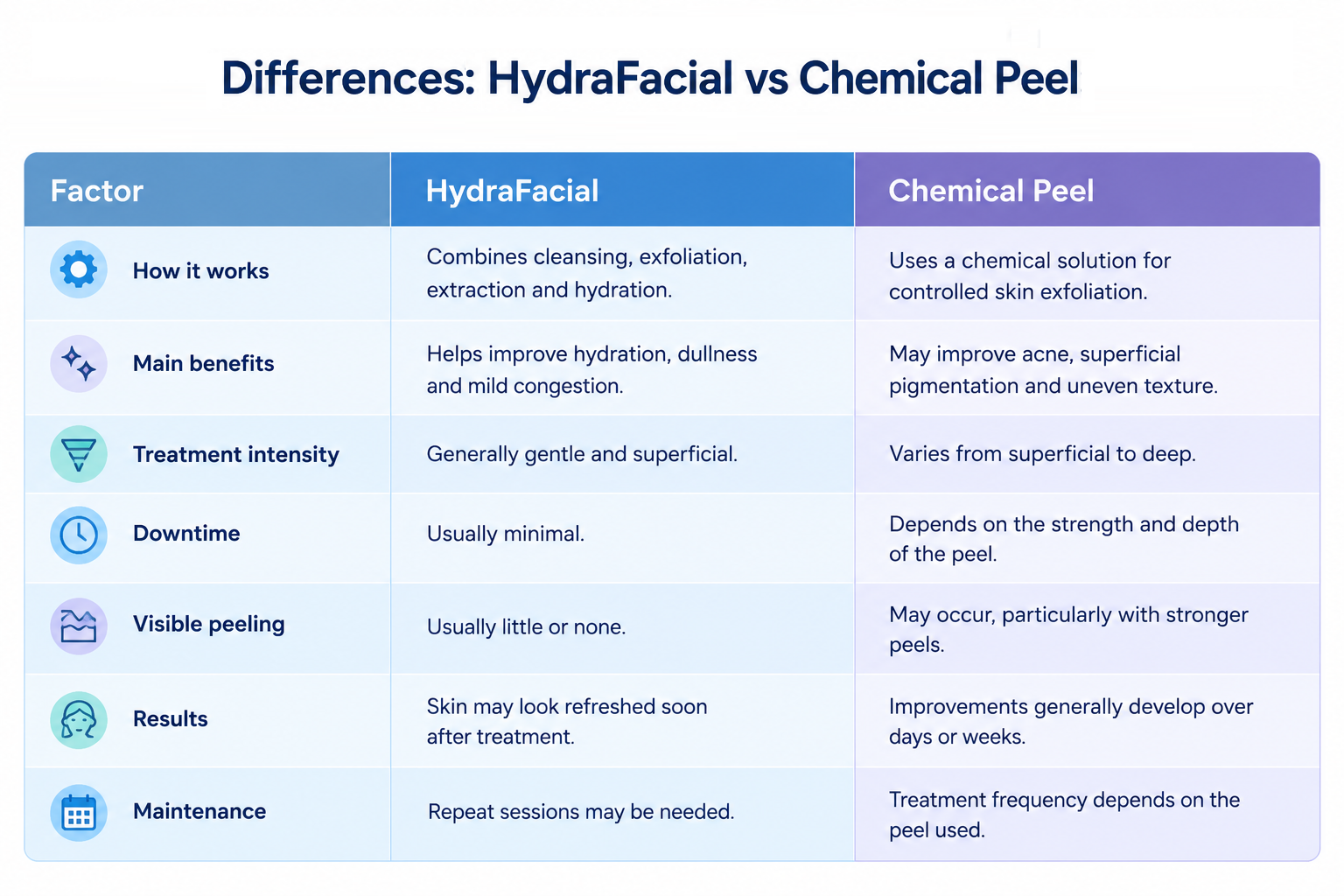
One important difference is that a HydraFacial focuses largely on improving the skin’s surface appearance and hydration. Chemical peels offer a wider range of exfoliation depths, allowing dermatologists to address certain concerns that a routine facial may not adequately treat.
However, stronger treatment does not automatically mean better results.
A chemical peel that works well for one person’s skin may irritate or cause pigmentation problems in another. Similarly, a HydraFacial may improve dull skin’s appearance without addressing the underlying cause of persistent acne or dark patches.
Neither treatment should be considered a replacement for medical care when a skin condition requires diagnosis or prescription treatment.
How to Choose Between HydraFacial and Chemical Peel for Skin Concerns?
The best way to compare these treatments is to focus on your specific skin concern rather than which procedure is more popular.
1. For Dull and Dehydrated Skin
Skin can appear dull due to dryness, dead skin cell buildup, environmental exposure or an unsuitable skincare routine.
A HydraFacial may be appropriate when the main goal is to improve surface hydration and achieve a temporarily refreshed appearance. Its combination of exfoliation and moisturizing solutions can help skin feel smoother.
A superficial chemical peel can also reduce dullness, especially when uneven texture or surface buildup contributes to the problem.
However, if the skin is already dry, irritated, or sensitive, exfoliation may worsen discomfort. Restoring the skin barrier may need to come before either procedure.
2. For Acne-Prone and Congested Skin
Acne treatment depends on the type and severity of breakouts.
For mild congestion and blackheads, a HydraFacial may help remove surface debris and improve the appearance of clogged pores. However, it does not address every cause of acne and should not replace prescribed acne medication when needed.
Certain superficial chemical peels, including appropriately selected salicylic acid peels, may help manage mild acne and excess oil.
For painful, inflamed, or persistent acne, a dermatologist should assess the condition before recommending either treatment.
It’s also important to distinguish active acne from acne scars. Deep or pitted scars generally require different procedures, and neither a routine HydraFacial nor a superficial peel can remove them.
3. For Pigmentation and Dark Spots
Dark spots can develop after acne, sun exposure, inflammation, or hormonal changes. Different causes of pigmentation require different approaches.
Selected chemical peels may help improve superficial pigmentation and uneven-looking skin tone. However, their suitability depends on the type of pigmentation and the patient’s skin characteristics. Melasma needs special attention because it can persist and may worsen after aggressive treatments.
A HydraFacial may temporarily improve skin radiance, but it is not a primary treatment for melasma or deeper pigmentation.
For persistent dark patches, a dermatologist may recommend prescription skincare, consistent sun protection or selected procedures based on the diagnosis.
4. For Fine Lines and Uneven Skin Texture
Fine lines and rough skin texture can develop due to ageing, sun exposure and changes in the skin’s structure. A HydraFacial may temporarily make fine lines appear less noticeable by improving hydration and surface smoothness. However, it does not significantly correct deeper wrinkles or structural changes. Chemical peels may offer more noticeable improvement for certain superficial lines and texture concerns, depending on their depth and formulation.
Deeper wrinkles, significant skin laxity, and pronounced acne scars may require other treatment approaches.
What About Recovery and Side Effects?
Recovery is another factor worth considering.
A HydraFacial generally involves little downtime, although temporary redness, sensitivity, or irritation can occur.
With chemical peels, recovery depends on the peel’s strength. Superficial peels may cause mild dryness or flaking, while deeper peels can involve more noticeable peeling, redness, and a longer healing period.
Both procedures require appropriate aftercare. Sun protection is especially important after exfoliating treatments because recently treated skin may be more sensitive.
Avoid combining strong exfoliating products or scheduling multiple procedures close together without professional advice. Excessive exfoliation can irritate the skin barrier and increase the risk of pigmentation changes.
Ultimately, HydraFacial may be more suitable for temporary hydration and surface refreshment, while chemical peels may be considered for selected acne, pigmentation, and texture concerns. Neither is universally better. Your skin condition and treatment goals should guide the decision.
Looking for HydraFacial or Chemical Peel Treatment in Bangalore? Consult Dr. Vani Yepuri
Choosing between a HydraFacial and a chemical peel shouldn’t come down to trends or recommendations that worked for someone else. Your skin type, existing concerns, and previous reactions to skincare products all matter.
At Ridhi’s Skin & Hair Transplant Clinic in Bangalore, dermatologist Dr. Vani Yepuri, with 16 years of clinical experience, provides skin assessments and guidance on suitable aesthetic treatments.
Whether you’re considering treatment for dullness, uneven texture, acne-related concerns, or pigmentation, a consultation can help clarify which procedure may be appropriate, what improvement is realistic, and what precautions you should take.
Book a consultation with Dr. Vani Yepuri to discuss HydraFacial, chemical peels, and suitable treatment options for your skin.